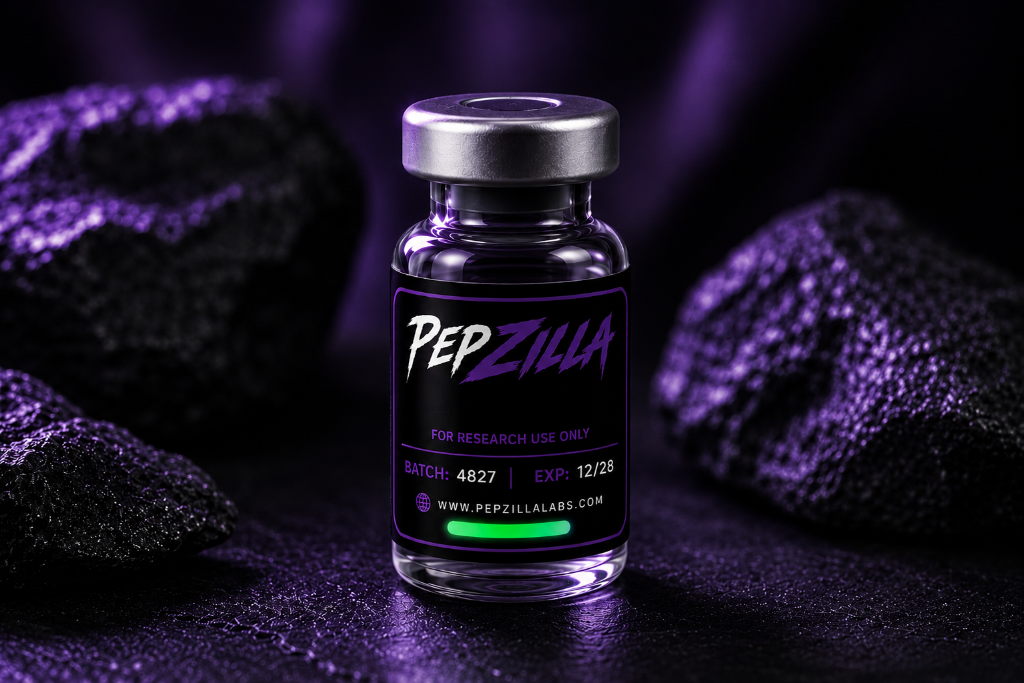
KPV: Molecular Mechanism & Research Applications
PEPTIDES DISCUSSED
KPV is a short bioactive peptide studied for its anti-inflammatory and barrier-protective effects in experimental systems. Chemically, KPV refers to the tripeptide Lys-Pro-Val, a C-terminal fragment derived from alpha-melanocyte-stimulating hormone (alpha-MSH), itself a peptide generated from the proopiomelanocortin precursor. Within research literature, KPV is commonly classified as a melanocortin-related immunomodulatory peptide fragment. Its principal physiological relevance in laboratory models centers on epithelial barrier tissues, innate immune signaling, and inflammatory response regulation, particularly in the gastrointestinal tract, skin, and pulmonary mucosa.
Mechanistically, KPV is investigated as a minimal pharmacologically active motif that reproduces several anti-inflammatory properties associated with alpha-MSH. Unlike full-length melanocortin peptides, KPV appears to exert effects through both melanocortin receptor-associated and receptor-independent pathways, depending on model system and experimental design. In cell and animal studies, KPV has been associated with downregulation of nuclear factor kappa B (NF-kappaB), reduced production of pro-inflammatory cytokines such as tumor necrosis factor-alpha, interleukin-1 beta, and interleukin-6, and modulation of mitogen-activated protein kinase signaling. Researchers have also examined its effects on cyclic AMP-linked signaling and on transcriptional programs involved in macrophage and epithelial inflammatory responses. A recurring theme is suppression of cytokine-driven inflammatory amplification while preserving tissue integrity.
In research models, KPV has shown activity across several tissue and organ systems. The intestinal epithelium is among the most studied targets, particularly in models of colitis, mucosal injury, and epithelial permeability dysfunction. Experimental findings suggest KPV may support barrier function by reducing inflammatory injury, influencing tight-junction-associated processes, and lowering leukocyte infiltration. In dermatologic models, the peptide has been examined for effects on cutaneous inflammation, wound environments, and keratinocyte-associated immune responses. Pulmonary and airway models have also been explored because mucosal inflammatory cascades in the lung share many signaling features with the gut and skin. Additional work has examined macrophages, monocytes, and epithelial cell lines to define direct cellular signaling effects.
Primary research applications focus on inflammatory bowel disease models, mucosal immunology, wound-healing biology, and inflammatory skin research. Investigators frequently study KPV in relation to NF-kappaB, MAPK, and cytokine-network regulation, as well as oxidative stress and epithelial restitution pathways. Interest also extends to host-microbe interface biology, since excessive innate immune activation at barrier surfaces can drive chronic tissue injury. Some studies evaluate whether KPV alters myeloperoxidase activity, chemokine expression, or inflammatory transcriptional profiles in response to bacterial products or chemical injury. Its small size also makes it attractive for formulation research, including topical and localized delivery systems designed to test peptide stability and mucosal targeting.
KPV has been studied alongside several notable compounds and therapeutic frameworks. One common area involves comparison or combination with other melanocortin peptides, especially alpha-MSH analogues, to determine whether the tripeptide retains the parent peptide’s anti-inflammatory pharmacology with simpler structure. It is also evaluated in delivery platforms incorporating hyaluronic acid, polymeric carriers, or hydrogel systems, which may improve local retention on epithelial surfaces. In gastrointestinal research, investigators have explored pairing anti-inflammatory peptides with barrier-supportive agents or microbiome-directed strategies to assess additive effects on mucosal recovery. Synergy is generally framed around complementary actions: KPV may suppress inflammatory signaling while other agents enhance tissue repair, drug residence time, or epithelial regeneration.
Current scientific understanding supports KPV as a promising experimental anti-inflammatory peptide with reproducible activity in preclinical models, especially at barrier tissues. However, its exact receptor pharmacology remains incompletely resolved, and not all observed effects can be attributed to a single canonical target. Recent studies continue to emphasize its role in dampening inflammatory cascades, preserving epithelial function, and modulating cytokine output under stress or injury conditions. Ongoing research is focused on formulation, local delivery, mechanistic specificity, and translation of in vitro findings into robust animal data. At present, the evidence base is preclinical and mechanistic rather than therapeutic in a clinical sense.
Disclaimer: KPV is a research compound intended strictly for laboratory and scientific investigation only. It is not approved for human consumption, medical use, dietary use, or self-administration.
SHOP RELATED COMPOUNDS
Research-grade peptides mentioned in this article