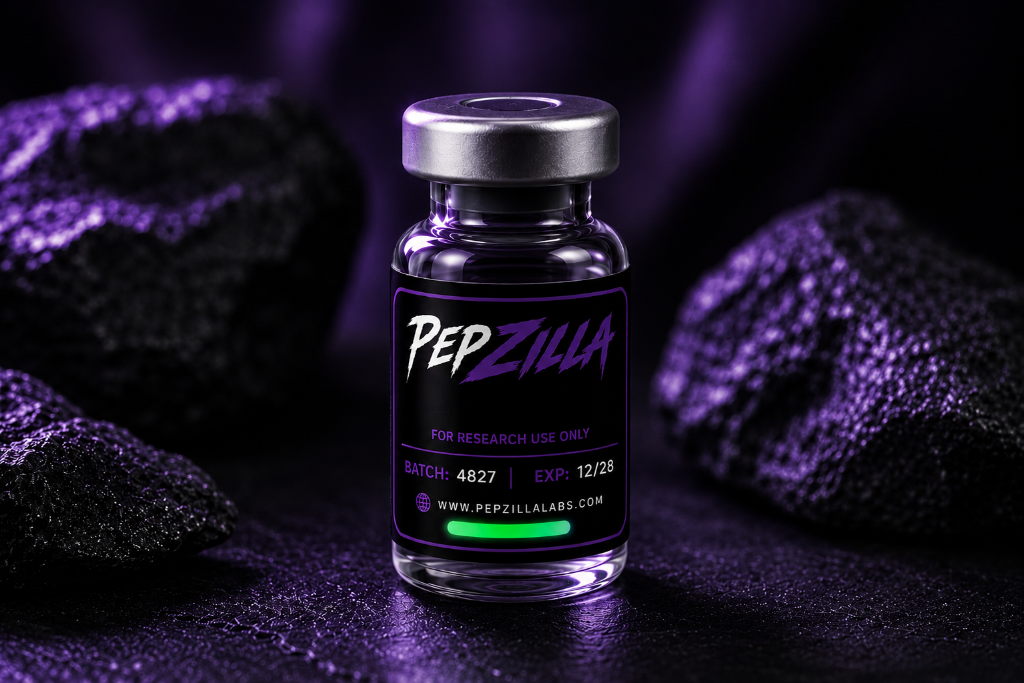
Semaglutide: Explained Simply
PEPTIDES DISCUSSED
Semaglutide: the lab-made compound researchers are studying for how it may help control appetite, blood sugar, and body weight.
In Simple Terms
Semaglutide is a compound that scientists study because it seems to affect some of the body’s natural “eat, store, and use energy” signals. In everyday language, it’s often talked about as something connected to feeling full, eating less, and how the body handles sugar.
It belongs to a group of compounds designed to copy the action of a natural hormone the body already makes after eating. That natural signal helps tell the body, “Food is coming in, handle it properly.” Researchers are interested in semaglutide because it appears to strengthen that message.
That’s why this compound keeps showing up in conversations around metabolism research, appetite research, and weight-related studies. It sits at the crossroads of several big scientific questions: how hunger works, why blood sugar rises and falls, and what signals tell the body when it has had enough to eat.
How Does It Work?
A simple way to think about semaglutide is to imagine the body has a built-in messaging system, like text alerts between the stomach, brain, and pancreas.
After you eat, one of those messages might say:
- “We’ve got food now.”
- “Slow down on hunger.”
- “Release the right amount of insulin.”
- “Don’t empty the stomach too fast.”
Researchers believe semaglutide acts like a stronger, longer-lasting version of one of those messages.
Another easy analogy: picture a dimmer switch instead of an on-off button. Hunger, fullness, and blood sugar control are not controlled by one single switch. They are adjusted gradually by many signals. Semaglutide seems to “turn up” the fullness signal and help “steady” the body’s response to food.
Scientists are especially interested in how it may help the brain notice fullness sooner, how it may slow the speed at which food leaves the stomach, and how it may support the body’s normal blood sugar response after meals.
What Is It Studied For?
Researchers look at semaglutide in several major areas:
-
Appetite research
It is studied for how it may affect hunger, cravings, and feelings of fullness. -
Weight-related research
Scientists are interested in whether it may support lower calorie intake and changes in body weight over time. -
Blood sugar research
It is studied for how it may influence the body’s handling of sugar after meals. -
Metabolic health research
Researchers explore how it may affect the wider systems involved in energy use, fat storage, and insulin signaling. -
Digestive timing
It is also studied because it may slow how quickly food moves out of the stomach, which could play a role in fullness and blood sugar balance.
Things to Know
Here are a few plain-English facts about semaglutide:
- It is not a simple stimulant. It does not work like something that just “speeds you up.”
- It is designed to mimic a natural body signal, which is one reason researchers find it so interesting.
- It gets attention because it appears to affect both appetite and blood sugar, which is a powerful combination in research.
- It is part of the broader world of modern peptide and metabolic research, an area many forward-looking labs see as cutting-edge.
- Because compounds like this attract so much interest, serious researchers pay close attention to purity, consistency, and lab-grade quality when sourcing materials for study.
Why Researchers Are Excited
Semaglutide has become one of the most talked-about compounds in metabolism research for a reason. It connects to some of the biggest questions in modern science: how the body regulates hunger, why weight is so hard to control, and how internal signals shape health over time.
There’s also a certain buzz around it because it represents a newer style of research—smart, targeted, and designed to work with the body’s own signaling systems rather than forcing a blunt effect. In the world of advanced compound research, that makes semaglutide feel especially current, high-interest, and yes, a little glamorous.
Disclaimer: This article is for informational purposes only. Semaglutide is a research compound for laboratory use only and not for human consumption.
SHOP RELATED COMPOUNDS
Research-grade peptides mentioned in this article