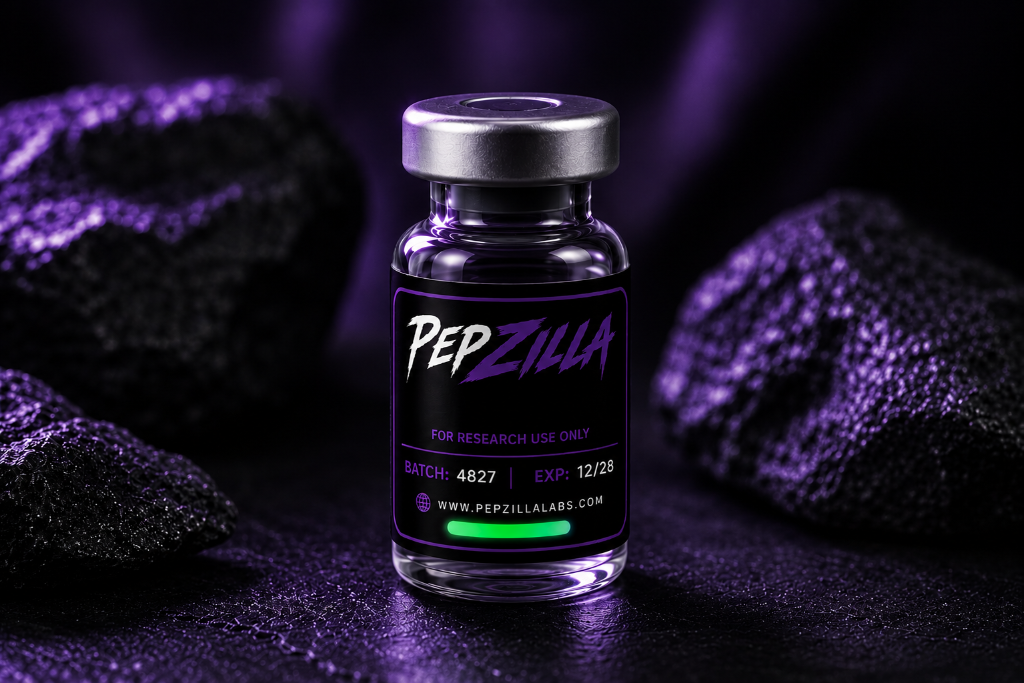
KPV: Explained Simply
PEPTIDES DISCUSSED
KPV: A Tiny Peptide Getting Big Attention
KPV is a very small peptide—just three building blocks long—that researchers are studying for its possible calming effects on irritation and inflammation in the body.
In Simple Terms
So, what exactly is KPV?
KPV is a short fragment of a larger natural substance connected to the body’s response systems. Even though it’s tiny, researchers are interested in it because it seems to have some surprisingly useful effects in lab research. In particular, KPV is being studied for how it may help calm overactive inflammatory responses.
That matters because inflammation is involved in a lot of problems researchers care about—from irritated skin to digestive issues to general tissue stress. KPV has become interesting because it may offer a more targeted way to study how the body cools down these reactions.
In everyday English: scientists are looking at KPV as a kind of “calm-down signal” that may help turn down the body’s unnecessary alarm bells.
How Does It Work?
The easiest way to picture KPV is to imagine a smoke alarm that keeps going off even after the toast is no longer burning. The room is safe now, but the alarm is still loud and stressful.
Researchers think KPV may act a bit like someone pressing the “reset” button.
More simply, the idea is that KPV may help quiet some of the body’s chemical messages that drive redness, swelling, and irritation. Instead of “fighting harder,” it may help the system “settle down.”
That’s a big reason scientists find it so appealing. Many compounds are studied for how they stimulate or block something. KPV stands out because it appears to be linked to restoring balance. In lab settings, that makes it an intriguing candidate for studying how the body regulates inflammation without taking a brute-force approach.
Of course, researchers are still learning exactly how it behaves in different systems. But the core idea is simple: KPV may help tone down excess inflammatory signaling.
What Is It Studied For?
KPV is being studied in several main research areas:
-
Gut health research
Scientists are interested in how KPV may affect inflammation in the digestive tract. This is one of the biggest areas of curiosity around it. -
Skin research
Because skin irritation often involves inflammation, KPV has drawn attention in studies looking at redness, barrier stress, and inflammatory skin responses. -
Immune response research
Researchers are exploring how KPV may interact with immune-related signaling and whether it helps support a more balanced response. -
Tissue recovery research
Some studies look at whether KPV may play a role in how stressed or irritated tissues recover in lab models. -
Inflammation research in general
Broadly speaking, KPV is studied as a tool for understanding how inflammation can be reduced or better controlled.
Things to Know
Here are a few plain-English facts about KPV:
-
It’s tiny.
KPV is made of just three amino acids, which makes it much smaller than many other peptides. -
It’s part of a bigger story.
KPV is a fragment related to a larger naturally occurring peptide, which is part of why it caught researchers’ attention in the first place. -
It’s being studied, not settled science.
KPV is promising, but it is still a research topic. There is still a lot scientists do not fully know. -
Its main appeal is precision.
Researchers like compounds that seem to have focused, specific effects, and KPV fits that modern, cutting-edge style of investigation. -
Quality matters in research.
In serious lab work, purity and consistency are important when studying peptides like KPV, because researchers want reliable results.
Why Researchers Are Excited
KPV has that rare mix that gets the research world buzzing: it’s small, elegant, and tied to one of the hottest topics in science—inflammation and immune balance. It feels modern, precise, and full of possibility, which is exactly why forward-thinking labs keep an eye on compounds like this. In the fast-moving world of peptide research, KPV has become one of those quietly glamorous molecules that people love to talk about because it just might open the door to smarter, more refined ways of studying how the body restores balance.
Disclaimer: KPV is a research compound intended for laboratory use only. It is not for human consumption and is not approved for use as a drug, food, or supplement.
SHOP RELATED COMPOUNDS
Research-grade peptides mentioned in this article